
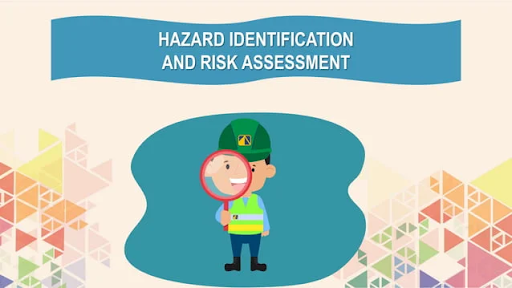
In today’s complex world, where safety and security are at the core of every concern, risk assessments are integral to ensuring that no harm is caused to any individual and that any disturbance in the organizational functioning is at a minimum. But who actually conducts these assessments? Let us understand the concept of risk assessment in complete detail to analyze the importance and responsibilities concerned.
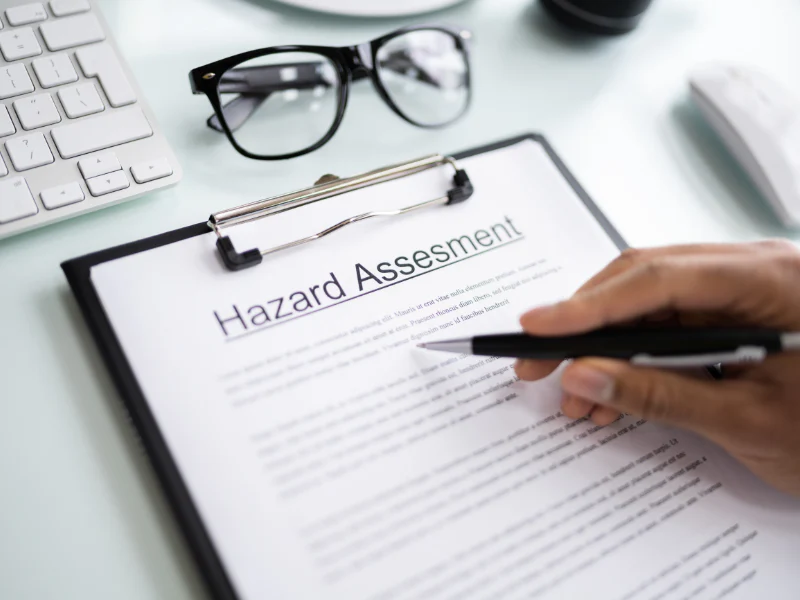
Who Is Responsible for Hazard Assessment?
The employers are responsible for health and safety in the workplace. That means that if there is an accident, injury or other incident in the workplace, the employer and the organization is responsible for it. The person responsible for hazard assessment is very important. Hazard identification is the process of recognizing anything that may cause injury, illness, or harm, whereas risk assessment is the process of analyzing the likelihood of such harm occurring and how severe that harm could be the risk. Together, they form the basis of any preventive safety strategy. It is not only a best practice but also the regulatory requirement of various occupational safety standards, such as ISO 45001 and OSHA guidelines.
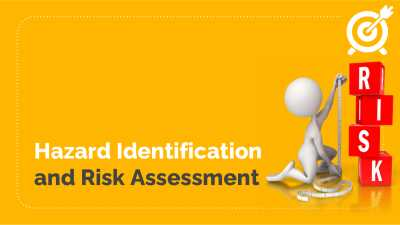
Understanding Hazard Identification and Risk Assessment
Accidents don’t just happen, but in most cases, there are hazards and warning signs that, if identified and addressed in time, can prevent incidents altogether. In fact, safety experts estimate that a large percentage of workplace accidents could be prevented with proper risk assessment and proactive safety management. It is here that Hazard Identification and Risk Assessment come into play. It is the basic, formalized process that safety professionals use to identify workplace dangers and evaluate associated risks so that appropriate controls can be devised before an injury or illness occurs.
Hazard Identification- The first step in HIRA is to try to identify all possible sources of harm within the entire organization. A “hazard” can be defined as any condition, substance, activity, or equipment that may cause injury, illness, or harm to people, assets, or the environment. As part of the process, one reviews job tasks, inspects equipment, evaluates the materials utilized, and at times talks to employees to obtain some insight. The categories of hazards include, but are not limited to, physical, chemical, biological, ergonomic, or psychosocial in nature. Accurate hazard identification increases the chances of eliminating missed risks and, therefore, simplifying the decision-making process in the next phase.
Risk Assessment- Assessed risks are further analysed in a more systematic manner once the potential hazards have been identified. Risks here are evaluated based on their likelihood of occurrence and the consequences that may arise. Estimation in regard to the level of risk and the kind of likelihood of different outcomes is normally done by using a risk matrix where risks are categorized as either low, moderate, high, or critical. This assessment aims to ensure that the fundamental risks needing corrective action and mitigation are appropriately prioritized and acted on. Decisions on better control are possible after risks have been estimated and considerations have been made on resource allocation. Overall, quantification in this case transforms static hazard data into actionable safety information. Quantification of risk data changes static hazard data into actionable safety information.
Who Conducts the Risk Assessment?
All risk assessments should be conducted by a competent person. If a company needs guidance to undertake a full risk assessment, then training is available. In this case, a competent person has sufficient knowledge, skills, and experience to recognize all the hazards and devise sufficient control measures to prevent harm. It does not have to be one person’s job to create risk assessments. The best possible risk assessments are those written with considerable input from workers in every facet of the business. Employees who frequently conduct work at height will be in the perfect position to suggest further safety controls that can be implemented and may even have noticed additional health and safety concerns that need to be dealt with. Not all jobs will require the same control measures, and the hazards will vary between projects. For example, falling through a fragile surface might be a hazard in one renovation job but not be relevant to another.
What is the Process of Conducting Risk Assessments?
- Identification of Potential Hazards- A risk assessment shall start by identifying possible hazards. This means a careful look at the work environment, workflows, equipment, and materials in use. Detailed observation and recording of potential hazards provide organizations with valuable insight into the risks they need to assess and mitigate.
- Evaluating and Prioritizing Risks– After identifying the hazards, the next step is the evaluation of the risk arising from each of them and prioritization. The evaluation includes the consideration of factors such as the likelihood of incidence and the severity of the consequences that might be experienced. Risk assessment enables organizations to dedicate appropriate resources necessary for control measures while considering the level of risk likely to be posed.
- Implementing Control Measures- The last step in the process of risk assessment is implementation to reduce the risk identified. Control measures can include engineering controls, administrative controls, and personal protective equipment. The organization needs to make sure the control measures put in place are effective and are continuously evaluated for their effectiveness. This includes periodic review of the risk assessments to identify changes or any emerging hazards that may require additional controls.
- Training and Education for Risk Assessments- Conducting effective risk assessments requires certain types of skills and knowledge. Organizations should therefore arrange relevant training and education to increase the capability of their employees working in this area.
- Competencies Needed for Risk Assessment– The professionals carrying out Risk assessments should be able to identify hazards, evaluate risks, and know the legislation that applies. Training programs should provide training on developing these kinds of skills and offering practical tools that are essential in the application of proper and precise risk assessments.
- Risk Assessment Training Resources- Risk assessment training resources are, thankfully, plentiful for any organization that wishes to improve its risk assessment capability. These come in the form of training courses, webinars, publications, and consultancy services. Investment in quality training programs and utilization of such resources will go a long way in ensuring that the employees have acquired ample skills and knowledge to conduct effective risk assessments.
Conclusion
Risk assessments are a shared responsibility between management and employees in compliance with legal obligations. The organization can understand the process and the roles involved in developing safer working environments, protection of assets, and the discharge of the duty of care to both employees and the public. With a commitment to continuous training and education in the process, an organization may better its knowledge, skills, and competencies in risk assessment to be more prepared for the identification, evaluation, and mitigation of vulnerabilities and hazards. Ultimately, risk assessment is everyone’s responsibility because safety and security require vigilance, cooperation, and proactive identification and management of risk.
