

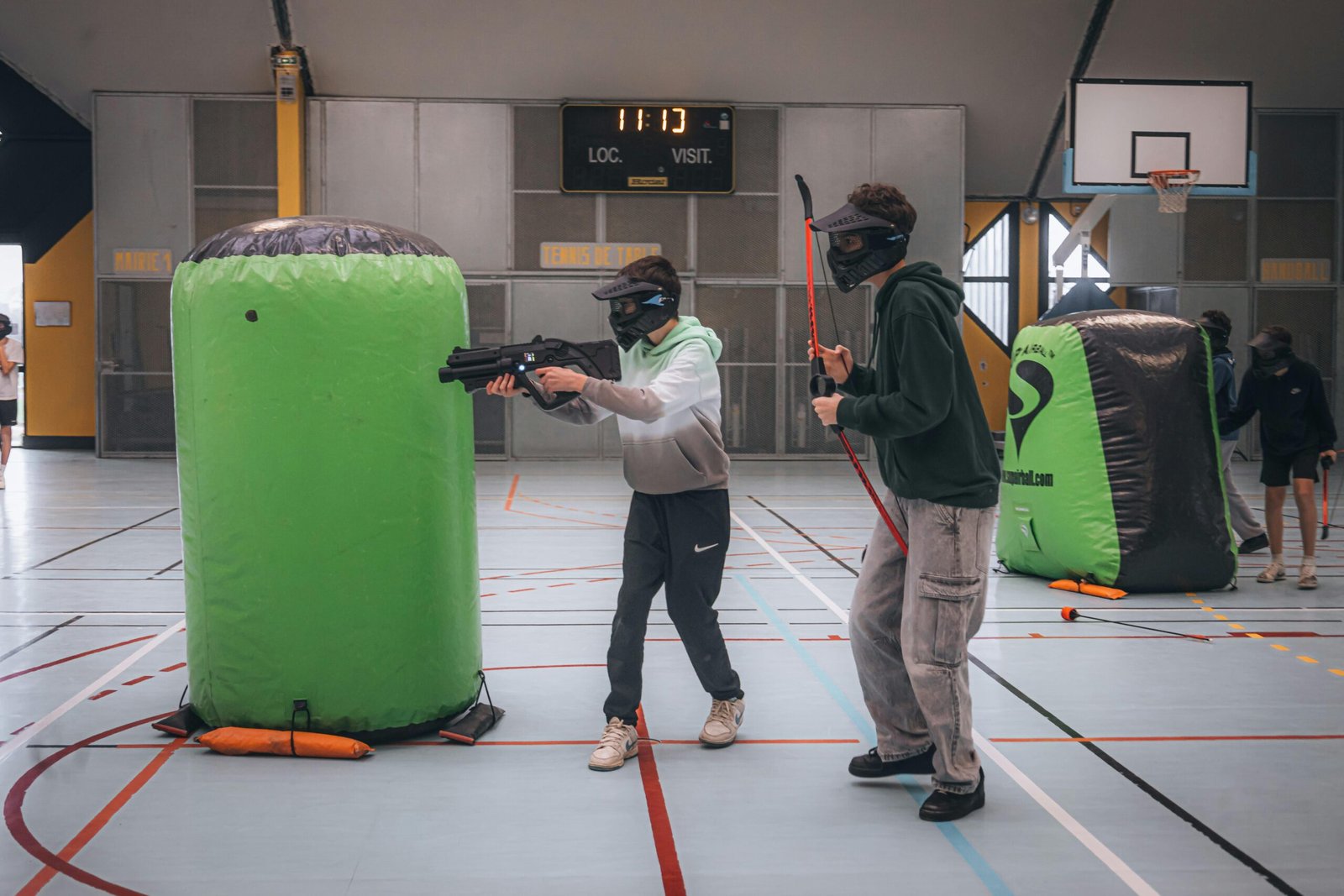
Over the years, laser tag has evolved into one of the most exciting and technology-driven recreational activities. Families, teens, competitive players, and corporate groups continue to embrace it because it blends interactive tech with physical action. As arenas grow more advanced, the experience becomes increasingly immersive, making it a go-to choice for both casual fun and structured competitive play.
History and Origin – The Early Days of the Game
The origins of laser tag can be traced back to the early 1980s, inspired by futuristic film technology that used beams of light in combat scenes. This sparked the idea of creating a real-world game where players could “tag” one another using electronic sensors. Early systems were simple, focusing mostly on light beams and basic vests. Over time, developers introduced enhanced scoring, better targets, and improved blasters. What began as a novelty quickly expanded into a global entertainment industry that continues to innovate every decade.
How Laser Tag Works – The Tech Behind the Fun
At the heart of laser tag lies a combination of infrared technology, responsive sensors, and real-time scoring systems. Players wear vests embedded with small receivers that detect when they are hit. The blasters emit harmless infrared light signals that travel to the sensors. Advanced arenas now use smart tracking, LED indicators, hit recognition, and even AI-driven systems to enhance accuracy. The technology ensures fair play, instant feedback, and an overall thrilling experience.
Equipment Overview – Vests, Sensors, and Blasters
Modern laser tag equipment is designed to be lightweight, durable, and highly responsive. LED vests glow in different team colors, while integrated sensors detect hits from various directions. Blasters include sound effects, reload systems, score displays, and sometimes vibration feedback to create realism. Many newer blasters are equipped with recharge packs, advanced triggers, and long-range infrared emitters. Equipment is designed to be user-friendly, making it simple for beginners and exciting for advanced players.
Also Read This:- Why the BYD Electric Car Leads Modern Tech Discussions
Gameplay Styles – Team Battles, Solo Modes, and More
One of the strengths of laser tag is its variety of gameplay options. Team battles are the most common, where groups compete to earn points or achieve objectives such as securing zones or protecting bases. Solo missions challenge every player to tag as many opponents as possible. Some arenas offer capture-the-flag, elimination rounds, stealth modes, and objective-based missions using props and advanced scoring. This diversity makes every session feel different and keeps players returning for new challenges.
Arena Design – Themes, Obstacles, and Immersive Tech
The modern laser tag arena is a blend of creative design and cutting-edge technology. Many arenas feature sci-fi themes, neon mazes, urban battlegrounds, or post-apocalyptic landscapes. Fog machines, LED walls, and synchronized music amplify the atmosphere. Increasingly, arenas use interactive targets, smart bases, motion sensors, and environmental triggers to enhance gameplay. These elements create a fully immersive world where players feel part of a futuristic mission rather than a simple game.
Age Suitability – Who Can Play and Safety Guidelines
One of the best things about laser tag is its accessibility. Children as young as six can participate in many arenas, thanks to lightweight equipment and safe infrared signals. Teens and adults enjoy the strategic depth and athletic challenge. Safety precautions—such as non-contact gameplay, padded arenas, and clearly marked pathways—make it suitable for family outings, school groups, and birthday parties. Every venue maintains rules to protect players and ensure a smooth experience.
Physical Requirements – Movement, Stamina, and Skill Levels
While laser tag is not as physically demanding as paintball or airsoft, it still requires a moderate level of movement. Players often run, crouch, and take cover during matches. The game promotes agility, coordination, and cardiovascular activity. At the same time, skill levels vary widely, and the game is accessible even to beginners or those with limited athletic experience. Strategy often matters more than speed, giving everyone an equal chance to enjoy the thrill.
Variations of Laser Tag – Outdoor, Indoor, and Pro Leagues
Indoor arenas remain the most common setting for laser tag, offering controlled environments with stunning lighting effects. Outdoor fields bring a more realistic combat experience using larger equipment and extended gameplay ranges. Professional leagues are emerging as well, with teams competing in standardized formats, high-tech arenas, and official tournaments. These variations ensure there’s a version of the game suitable for every preference—whether someone wants casual fun or professional competition.
Also Read This:- Rope Hero Mod APK: Unlimited Money, Gems & All Skins Unlocked
Benefits of Playing – Fitness, Strategy, and Social Interaction
Playing laser tag offers a surprising number of benefits. It boosts physical fitness through constant movement while fostering quick decision-making and strategic thinking. The game encourages teamwork, communication, and coordination, making it ideal for group activities. Socially, it brings people together through shared challenges and excitement. Many families use it as a bonding activity, while friends enjoy it as a fast-paced alternative to traditional gaming.
Laser Tag in Events – Parties, Corporate Games, and Tournaments
Because of its broad appeal, laser tag has become a staple at parties, corporate outings, and community events. Birthday parties often feature themed missions and group challenges. Corporate groups use the game to encourage cooperation and build stronger team relationships. Tournaments allow skilled players to showcase their abilities in competitive environments. The game’s ease of setup and wide accessibility make it an excellent choice for events of all sizes.
Future Innovations – AI Gadgets, Smart Sensors, and VR Fusion
The future of laser tag looks brighter than ever. Many companies are integrating AI-enhanced gear, real-time tracking, haptic feedback, and VR overlays to elevate gameplay. Smart sensors can detect motion, track accuracy, and adjust difficulty levels automatically. VR elements bring mixed-reality experiences where digital objects appear inside the physical arena. These advancements promise deeper immersion, more customization, and endless ways to play.
Conclusion
As technology advances, laser tag continues to innovate and expand around the world. Its blend of physical action, strategic gameplay, and futuristic tech makes it a favorite activity for players of all ages. Whether enjoyed casually or competitively, the game offers a thrilling escape that keeps evolving with new ideas and new technology. Its future will likely bring even more immersive experiences that redefine interactive entertainment.
FAQs
What makes laser tag safe for children?
Laser tag uses harmless infrared light and non-contact gameplay, making it kid-friendly.
Do players need to be athletic to participate?
Not at all; the game uses light to moderate movement and suits all fitness levels.
Can laser tag be played outdoors?
Yes, many venues offer outdoor fields with larger play areas and longer-range equipment.
Is laser tag good for team-building events?
Absolutely; it encourages teamwork, communication, and strategic thinking.
What kind of technology do modern arenas use?
They use infrared systems, LED vests, motion sensors, smart bases, and immersive lighting.
For More Latest Update oneuppress
