

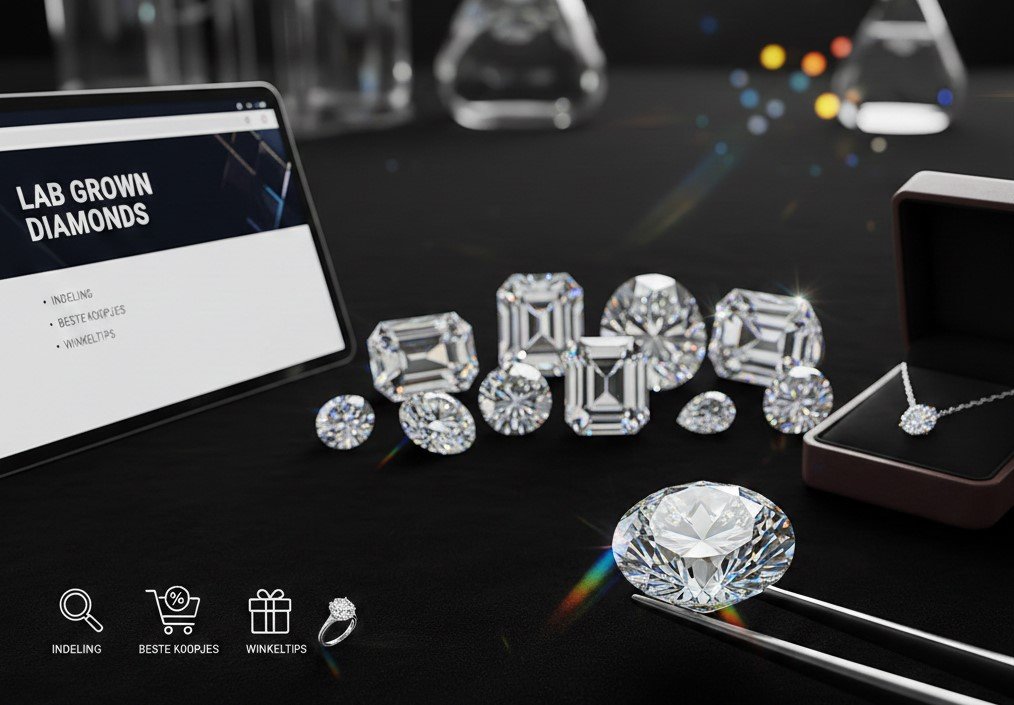
Lab grown diamonds have reshaped the world of fine jewelry, offering a blend of sustainability, brilliance, and affordability that modern buyers appreciate. These ethically created gems mirror natural diamonds in beauty and durability, while representing a future-focused approach to luxury.
Early Life & Background
The “early life” of lab grown diamonds began inside scientific research centers where physicists and gemologists explored ways to recreate natural diamond conditions. Instead of forming deep underground over billions of years, these diamonds were born in controlled laboratory chambers that replicated intense heat and pressure.
Their background is rooted in innovation, sustainability, and ethics. As concerns grew regarding environmental impact and conflict mining, the demand for ethical gemstones increased dramatically. Scientists exploring crystal growth technologies discovered that diamonds could be produced with identical chemical, optical, and physical properties — transforming the jewelry industry forever.
Age & Date of Birth
Although diamond synthesis experiments date back to the 1950s, the modern form of lab grown diamonds was officially established in the early 2000s when high-quality gem-grade stones became commercially viable. Their “birth date” is tied to the development of two key technologies:
- HPHT (High Pressure High Temperature), originally used to enhance natural diamonds
- CVD (Chemical Vapor Deposition), a breakthrough method allowing precise crystal formation
Today, lab grown diamonds are roughly two decades into mainstream market adoption, but their impact has already transformed modern jewelry trends.
Also Read This:- Discover the Slylar Box: A Sleek and Functional Storage Solution
Education
The “education” of lab grown diamonds occurred through decades of scientific experimentation. Researchers studied natural diamond formation, carbon atom alignment, heat distribution, and brilliant-cut faceting techniques.
Their learning journey includes:
- Understanding the molecular structure of pure carbon
- Replicating Earth’s mantle-like conditions
- Perfecting crystal clarity and color grading
- Collaborating with jewelers to achieve ideal cuts
- Improving growth chambers for larger, flawless stones
This ongoing education refined the diamonds into flawless gems that rival — and sometimes surpass — natural stones in beauty and quality.
Career Beginnings
The career of lab grown diamonds began quietly, mostly within industrial applications such as cutting tools and electronics. These early roles were practical rather than glamorous. However, as technology improved and jeweler demand increased, the diamonds transitioned into the fine jewelry industry.
Their first major “jobs” included:
- Being set in engagement rings as affordable alternatives
- Appearing in eco-conscious fashion collections
- Serving as gemstones for modern minimalist jewelry
This transition marked the official beginning of their rise within luxury markets.
Rise to Fame / Breakthrough Moment
The breakthrough moment for lab grown diamonds came when major jewelers and celebrities began endorsing them. As consumers became more aware of ethical sourcing and environmental responsibility, these diamonds quickly gained popularity.
Key turning points included:
- Jewelers offering full lab-grown collections
- Celebrities showing off lab-created diamond rings
- Social media influencers promoting sustainable jewelry
- Public awareness of conflict diamonds and mining impact
This surge in recognition shifted lab grown diamonds from “alternatives” to highly desirable luxury gems.
Current Career & Major Works
Today, lab grown diamonds enjoy a thriving career in the global jewelry industry. They are featured in engagement rings, wedding bands, pendants, bracelets, and high-fashion pieces across major luxury brands.
Their major works include:
- Engagement rings with round and oval cuts
- Earrings featuring flawless brilliance
- Tennis bracelets designed with precision-cut diamonds
- Colored diamonds such as pink, blue, and yellow created ethically
- Designer collaborations showcasing sustainable luxury
Their influence grows yearly as more buyers choose lab-created stones for beauty, affordability, and responsibility.
Physical Appearance
The physical appearance of lab grown diamonds is identical to natural diamonds. They exhibit the same fire, brilliance, and crystal clarity, making them visually indistinguishable from mined stones.
Notable appearance features include:
- Stunning sparkle under natural and artificial light
- Crisp, geometric facets reflecting intense brilliance
- Crystal-clear structure, especially in higher grades
- Occasional flawless clarity not always found in mined stones
- Availability in all standard and fancy shapes
Whether used in rings, earrings, or necklaces, their beauty stands out immediately.
Personal Life
The “personal life” of lab grown diamonds reflects values of sustainability, ethics, and modern luxury. They fit effortlessly into the lifestyles of conscious consumers who appreciate beauty without compromise.
Their personality traits include:
- Responsible
- Modern
- Elegant
- Forward-thinking
- Innovative
People who wear lab grown diamonds often value transparency, environmental care, and high-quality craftsmanship — making these gems perfect companions for meaningful jewelry.
Relationships
The relationships of lab grown diamonds extend throughout the jewelry world. They pair beautifully with:
- Platinum engagement rings
- Rose gold contemporary settings
- Minimalist silver jewelry
- Vintage-inspired ring designs
- Colorful gemstone combinations
They also maintain strong relationships with ethical fashion lovers, sustainability advocates, and tech-forward jewelers embracing innovation.
Controversies or Challenges
Despite their rising popularity, lab grown diamonds have faced certain challenges:
- Misconceptions that they are “fake” despite being real diamonds
- Resistance from traditional diamond sellers
- Pricing fluctuations due to improved production efficiency
- Confusion between lab-grown diamonds and simulants such as cubic zirconia
However, ongoing education has dispelled many myths, helping consumers understand that these diamonds are chemically and physically identical to mined stones.
Achievements & Awards
Lab grown diamonds have earned remarkable symbolic achievements in their short time in the luxury market:
- Recognized by jewelers worldwide as real, authentic diamonds
- Praised for reducing environmental damage
- Featured in sustainable bridal collections
- Highlighted by fashion magazines for their brilliance
- Celebrated as an accessible option for consumers
Their greatest achievement is transforming the diamond industry with innovation and ethics.
Net Worth & Financial Overview
The financial impact of lab grown diamonds is substantial. The industry is growing rapidly as consumers shift toward sustainable luxury. High-quality lab diamonds command strong value due to their craftsmanship, beauty, and rising demand.
Their worth is influenced by:
- Carat size
- Cut precision
- Metal setting
- Lab certification
- Stone clarity and color
They are generally priced 40–70% lower than mined diamonds — making premium quality more accessible.
Social Media Presence
Lab grown diamonds have a powerful digital presence. Social media platforms highlight them in engagement announcements, jewelry hauls, and sustainability discussions.
Popular platforms include:
- Instagram engagement ring trends
- TikTok diamond comparison videos
- Pinterest bridal boards
- YouTube gemstone reviews
Their brilliance photographs beautifully, making them ideal for visually driven content.
Also Read This:- A Quick Guide to Understanding How Sleep Trials Work
Conclusion
The story of lab grown diamonds is one of innovation, ethics, and brilliance. Their journey from scientific discovery to mainstream luxury reflects modern values: sustainability, affordability, and timeless beauty. As more buyers embrace conscious jewelry choices, lab grown diamonds continue to shine brighter — proving that elegance and responsibility can coexist perfectly.
FAQs About Lab Grown Diamonds
Are lab grown diamonds real diamonds?
Yes, they have the same chemical, physical, and optical properties as mined diamonds.
Do lab grown diamonds last forever?
Absolutely—they are just as durable, with a hardness of 10 on the Mohs scale.
Are lab grown diamonds cheaper?
Yes, they cost significantly less due to efficient production.
Can lab grown diamonds be certified?
Yes, major labs like IGI and GIA certify them.
Do they look different from mined diamonds?
No, they are visually identical even under magnification.
Are lab grown diamonds eco-friendly?
They require fewer natural resources and have a lower environmental impact.
Do lab grown diamonds hold value?
They retain personal and aesthetic value, though resale markets vary.
Can they be used for engagement rings?
Yes, they are extremely popular for engagement and bridal jewelry.
Do lab grown diamonds come in colors?
Yes—pink, blue, yellow, and other fancy colors are available.
How are lab grown diamonds made?
Through HPHT or CVD processes that grow carbon crystals into diamonds.
For More Latest Update oneuppress
