

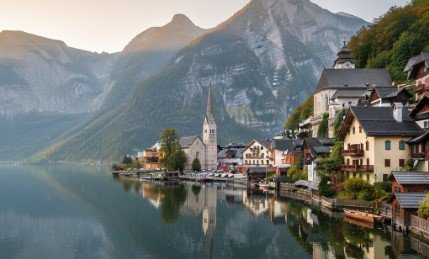
The journey to Hallstatt Austria felt like traveling through a dream. Approaching by ferry after taking the train from Salzburg, the view was unforgettable. A small cluster of houses reflected in the glassy surface of Lake Hallstatt, all backed by snow-tipped mountains. The crisp alpine air filled my lungs, and a quiet calmness settled over the landscape — the kind that makes you forget city noise even exists. There’s a gentle stillness to Hallstatt that feels almost sacred.
Hallstatt’s Physical Appearance: Like a Fairy Tale in Real Life
Hallstatt Austria is a town that looks like it was pulled from the pages of a children’s fairy tale. The houses, with their colorful 16th-century facades, wooden balconies overflowing with flowers, and narrow cobblestone lanes, are a joy to wander through. The entire town is tucked between the sparkling lake and towering Dachstein Alps, creating a perfect blend of natural and manmade beauty.
Each corner feels curated — not artificially, but by centuries of loving care and community. There’s a timeless elegance to Hallstatt, where every frame feels like a photograph waiting to be taken.
A Walk Through History
Behind its scenic charm lies a deep-rooted past. Hallstatt Austria is one of the oldest continuously inhabited villages in Europe, with history dating back over 7,000 years. The town owes much of its historical importance to salt mining, earning it the nickname “The Salt Prince of Austria.”
The Hallstatt Salt Mine is the oldest in the world. A guided tour through this fascinating underground world reveals not just mining techniques but ancient artifacts that date back to the Iron Age Hallstatt Culture. The Hallstatt Museum also provides an insightful look into how the village evolved through time. Its status as a UNESCO World Heritage Site is well-earned.
Exploring the Village: What to See & Do
Despite its small size, Hallstatt Austria offers a treasure trove of experiences. Start in the Market Square, where the town’s heart beats gently beneath rustic facades and charming shops. A short stroll leads to the Hallstatt Lutheran Church, a serene, lakeside structure that dates back to 1785.
For something more unique, visit the Ossuary (Bone House) behind the Catholic Church. With over 600 painted skulls, it offers a haunting but respectful glimpse into ancient traditions.
Don’t miss the Hallstatt Skywalk, accessible via a quick ride on the funicular railway. It offers a sweeping view of the entire village and lake below — a true highlight of the trip.
Among all, my favorite spot was a quiet bench by the lakeside promenade. Watching the swans glide across the mirror-like water with mountains guarding the horizon felt like pure poetry.
The People and Daily Life
The locals of Hallstatt Austria are warm and welcoming, though understandably protective of their village’s peaceful charm. Tourism is significant here, yet it doesn’t overshadow the rhythm of local life. Early mornings are the best time to see Hallstatt at its most authentic — fishermen rowing across the lake, bakery windows fogged with the scent of fresh pastries, and elderly locals exchanging greetings.
Every interaction felt genuine — whether it was a souvenir shop owner sharing the story behind hand-carved wooden toys or a restaurant host recommending their grandmother’s schnitzel recipe.
Cuisine and Cafés: Tasting Hallstatt
Austrian cuisine is rich, hearty, and comforting — perfect for a lakeside setting. I tried the classic Wiener Schnitzel, served with potato salad and a slice of lemon, and it was nothing short of delicious. Another highlight was the warm, spiced Apfelstrudel — flaky, sweet, and loaded with apples.
My favorite eatery was a lakeside café called Bräugasthof. The view of the calm lake paired with fresh-caught fish grilled to perfection created an unforgettable dining memory. And of course, pairing everything with a crisp Austrian white wine only elevated the experience.
Alos Read This:- Why You Need to Visit Vuzillfotsps: A Complete Guide for 2025
Relationships and Reflections
Traveling through Hallstatt Austria brought about a surprising sense of connection — not just with the place, but with people and thoughts that had been quietly tucked away in life’s busy corners.
Whether you’re visiting with someone or exploring solo, Hallstatt offers moments of stillness that prompt reflection. It encourages you to slow down, to breathe deeper, and to simply be. For me, it was a reminder that the most beautiful places often speak the softest.
Travel Tips for Hallstatt Austria
Best Time to Visit: While Hallstatt is magical year-round, spring and autumn offer fewer crowds and vivid colors. Winter turns the village into a snow-covered wonderland, perfect for photographers.
Getting There: From Salzburg or Vienna, take a train to Attnang-Puchheim, transfer to a local train toward Obertraun, and then take the ferry across Lake Hallstatt. Alternatively, you can drive directly, though parking is limited.
Where to Stay: Options range from cozy guesthouses to charming lakeside hotels. Try to book accommodations inside the old village for the most authentic experience.
Packing Essentials: Comfortable walking shoes, a waterproof jacket, camera, power bank, and layers for shifting mountain weather.
Challenges or Surprises
Like many visitors, I wasn’t prepared for the number of tourists during peak hours — especially from mid-morning to late afternoon. If you want solitude, plan your exploration early or stay overnight.
Another surprise was how compact the town is. It’s easy to think you can see everything in a few hours, but Hallstatt rewards those who linger. Stay longer, wander more, and don’t rush through its winding paths.
Also Read This:- Holafly Reviews: The Ultimate Guide to eSIM and Travel Data Solutions
Why Hallstatt Left a Mark on Me
Hallstatt Austria isn’t just a place to see — it’s a place to feel. It left a soft but lasting impression, reminding me that beauty doesn’t always scream; sometimes, it whispers. From its glassy lake to its heartfelt traditions, Hallstatt taught me the value of silence, simplicity, and soul.
Would I return? Absolutely. And not just to see more, but to feel more.
Conclusion
As I left Hallstatt Austria, I took one last look from the ferry. The reflection of the village on the lake seemed to wave goodbye — calm, eternal, and unchanged. This little village had given me more than views; it gave me perspective.
If you ever need a place that feels like time stands still, where nature and culture dance in harmony, let Hallstatt be that place.
FAQs
What is Hallstatt Austria known for?
It’s famous for its ancient salt mine, lakeside beauty, and UNESCO World Heritage status.
How do you get to Hallstatt Austria from Salzburg or Vienna?
Take a train to Attnang-Puchheim, transfer to Obertraun, then ferry across the lake.
Is Hallstatt worth visiting in winter?
Yes, winter transforms it into a snowy wonderland — perfect for photographers and romantics.
How many days should I spend in Hallstatt?
2–3 days allow enough time to explore leisurely and soak in the atmosphere.
Can I stay overnight in Hallstatt?
Yes, and it’s recommended for a peaceful experience before and after day-trippers arrive.
Is Hallstatt expensive to visit?
It can be, especially in peak season. Book accommodations early and eat like a local to save.
Is Hallstatt family-friendly?
Absolutely! It’s a great destination for families who enjoy nature, history, and calm surroundings.
Are there hiking trails near Hallstatt?
Yes, including trails around Lake Hallstatt and up toward Dachstein mountain.
What language do they speak in Hallstatt?
German is the main language, but most people in tourism speak English.
What makes Hallstatt different from other Austrian towns?
Its unique lakeside setting, ancient salt history, and fairy tale ambiance set it apart.
For More Latest Update oneuppress
